Claude Co: The Most Underrated AI Tool
Cloud Co might be the most underrated AI tool right now. It can read your files. It can control your browser. It can connect to your apps and actually do work for you, not just answer questions about it.

This is one of the best AI agents out there that actually works as an employee, but most people still use it for some of the simple stuff.
Automating Your Morning Content Planning
Every morning I wake up, and my entire content planning session is already done for me. Top performing AI videos researched, content gaps identified, script outlines are written for me, all before I’m even at my desk.
You can build skills inside co-work that teach you exactly how you work.
You can set up scheduled tasks that are done while you sleep. And with dispatch, you can control everything from your phone.
Setting Up Claude Co the Right Way
And in this video, I’m walking you through everything that you need to know to set up Claude Co the right way and actually get it working for you. Every single prompt, every single template, all of it is inside our free school community.
The link is down in the description below. But right now, let’s hop over to the PC.
Now, before we do that, we have to discuss what Claude Co-work is. So when you open up the Claw desktop app, you see that there are three tabs at the top. It is chat, co-work, and also code.
Now, here’s the simplest way to think about it.
Understanding Chat, Code, and Co-work
Chat is an assistant who answers your questions. You ask something, and it responds. You copy the text, and you go do something with it yourself.
Now, code is for writing code, running prompts, and also shipping entire products. It’s powerful, but you need a technical background in order to use it. And then you have co-work. It’s an employee who completes entire tasks on your computer.
All you do is describe what you want done. You walk away. You come back to a finished file that is sitting in your folder. It’s real Excel spreadsheets with working formulas, real PowerPoint decks with proper formatting, and real Word documents that are done and ready to send.
When to Use Co-work Over Chat
So, when should you use co-work over chat? Well, there are four situations.
Complex tasks that you want handled start to finish. Anything that needs direct access to your local files, repetitive work across many items, and anything that combines local files with online research.
Now, if your task hits any of these four, then you are going to want to use co-work.
Why Setup Matters More Than You Think
Now, I’m pretty sure that you know most tutorials out there rush through the setup, but it is so important.
That’s exactly why most people’s outputs always sound so generic. So, please do not skip this. Create your working folder. Don’t point Claude at your entire documents directory. Create a dedicated folder. And I call mine a co-work station and give Claude access to only that.
Now, inside it, I have three subfolders. It is context, projects, and output.
Context is what Claude needs to know about you, or about you in this case. Projects are where your active work lives. Output is where deliverables land once they are completed.
Creating Your Essential MD Files
So set up your MD files. And this is the most important step in this entire video. Now, inside your context folder, create three markdown files.
About me, MD, your role, business audience, what you care about, your brand, voice, MD, your tone, style, examples, words that you use, and the words that you avoid. Working preferences, MD, is how you want documents formatted and how Claude should handle the ambiguity.
And then Claude reads these automatically at the start of every session.
So, the best part is that you never actually have to explain yourself again.
Global Instructions That Apply Everywhere
And then the last one is global instructions. You go to settings, you go to co-work, you go to global instructions, you set your default ones, and then you have the tone, the role, the context, the formatting rules, and they apply to every co-work session.
So think of it as the standing brief that you give to a new person that you are hiring on day one.
Now, I’m pretty sure that you can see why the setup is so important. Okay, so now let’s leave the setup for just a moment and let me show you something that your business would actually pay someone to do.
Processing Client Meeting Transcripts
I’ve got a folder with six of your client meeting transcripts. There are discovery calls, there are strategy sessions, there are follow-ups, there are messy text files. I need a project and follow-up emails for each client.
Now, here’s the prompt, and I’m only going to be using one prompt, so read closely. Notice the task plan on the right.
Claude broke this into parallel work themes. Now, here’s what most tutorials never show you: the actual output. Here’s what it looks like. Proper columns, deadlines, extracted from the context. Someone said the end of next week in the call. Claude calculated the actual date. Now, that’s conditional formatting on priority summary, though at the bottom.
And this is a spreadsheet that you could send to a client right now. It has a follow-up email, references specific things in the meeting, confirms action items with deadlines, and it’s simple and it’s ready to send. This would have been about 2 to 3 hours of manual work. Claude did this in about 4 minutes.
The Problem With Starting From Zero Every Time
Now, here’s the problem with what I just showed you.
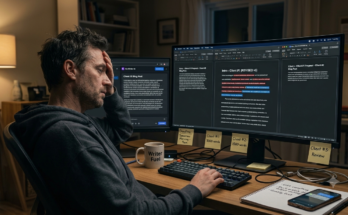
Next week, there are new transcripts. There are the same tasks, and Claude has forgotten everything. My formatting preferences, my email tone, my spreadsheet structure, all of it is just gone. Every session starts from zero. It’s kind of like briefing a new intern every Monday morning.
Now, projects, on the other hand, are what fix this.
Projects Create Persistent Memory
A project is a persistent workspace. It’s your instructions, your context files, and your memory; all of it is just baked in. Claude remembers what you did in the last session, and it builds on it. There’s no explanation on your part. Let me create one. Okay. So, I’m pointing it at my existing client work folder, and I’m adding instructions.
Use my brand voice from the context files. Emails under 150 words. Now, read the difference. Same transcript task from earlier on. It’s the same prompt. That’s the same files, but inside the project, the spreadsheet uses my preferred column order. The emails match my actual tone. The formatting is exactly how I specified it.
And I didn’t explain a single thing. And next week, when I adopt new transcripts in here, it will be even better because the project’s memory now includes what I adjusted from this session. One project per recurring workflow, client deliverables, YouTube content, admin, and finance. Each one gets smarter every time I use it.
Skills Deliver True Repeatability
Now, projects give you memory. Skill gives you repeatability. And the difference here really matters. A skill is an instruction file that tells Claude exactly how to handle a specific type of work. Think of it as a playbook for repeatable tasks. Co-work ships withbuilt-inn skills for common files, which include Excel, PowerPoint, Word, and PDFs.
When you ask Claude to build a spreadsheet, it pulls the Excel skill automatically. Proper formulas, formatting, charts, not a data dump, an actual working file. But the real power is the custom skills. Let me show you the difference and how to build on-screen. So, first, I’m going to ask Claude to help me write my YouTube script.
Now, I’ll tell it my tone, my preferences, my talking styles, and basically all the information I can give it I’m about to. Now, I’ll ask Claude to write the same script, one with the skill and once without. And here’s what Claude produced with the skill. Like, as you can see, it’s fine. I mean, it’s accurate, and it sounds like every other AI-generated script on the internet. There are generic hooks.
It’s predictable. The structure is predictable. There’s no personality whatsoever. Now, read what happens with my custom skills loaded. Completely different output. It’s the same plant. The hooks are punchy. The structure matches what actually works on my channel. The tone is conversational. and it reads like something that I’d actually say on camera, not something that an AI wrote.
That’s what a custom skill does. Complete Guide to Claude Cowork click here.
Scheduled Tasks Run Automatically
Schedule tasks, on the other hand, let you write a prompt once, and then you can just pick a cadence daily, weekly, or even monthly. And Claude does run it automatically. There’s no code. Thereares no APIs. There are no third-party automation tools. Just a prompt and a schedule.
Just click Schedule in the left sidebar. Then you’re going to hit a new task. You’re going to write the prompt. And then you’re going to pick your frequency, and you are going to save. I’m going to be setting up my morning briefing daily at 6:00 a.m. to check my Gmail for unread messages in the last 12 hours. And then check my Google calendar for today’s events.
Summarize what’s on my plate and save the briefing as morning brief.md in my daily briefings folder. And now let’s actually see if it’s working. Okay, as you can see, this is literally about 2 hours of work done automatically before I even wake up.
Three Critical Warnings Before You Schedule
Now, you are going to get three warnings before you schedule everything.
One is tasks only done while your computer is awake, and the desktop must be open. If you need overnight automation, adjust your energy settings so that your machine doesn’t sleep. Then two is each task door from your usage allowance. So, make sure not to add any fluff tasks. And then three is always tested manually first.
Run the prompt, review the output, tweak it until it’s producing exactly what you want, and then once all of that is done, you schedule it.
Dispatch Lets You Control From Your Phone
Now, what if you are not at your desk? That’s where Dispatch comes in. Dispatch lets you text Claude a task from your phone. It runs the full workflow on your desktop, and you basically just come back to all of your finished files.
Your phone is the remote control. Your desktop is the heavy lifting. Now, the setup takes about two minutes. All you have to do is you literally just go onto your phone, and then you open up Claude Co-work, and then dispatch is in the left panel. And that’s basically it. And now for my phone, I’m typing in to pull my YouTube analytics from this week.
Compare against last week and create a performance summary and save it to my YouTube content project. And that’s basically it. And now the task hits my desktop, and then Claw fires up inside my YouTube content project. So it already has my preferences and my context loaded. It pulls the data. It runs the comparison. It generates the summary.
It saves it. Then, a push notification on my phone comes through when it’s done.
Claude Automatically Chooses the Right Mode
Now, one thing that you do need to know is that Claude autoouts to the right mode. So coding tasks go to Claude’s code. Knowledge work goes to co-work. You don’t choose. Claude figures it out based on what you asked for.
Building Your Full YouTube Content System Live
Okay, let me build my entire YouTube content system live, and then I’m going to show you what it looks like when advance.
First, create a project called YouTube content. Point it at the dedicated folder. Add in the instructions. I then create a YouTube channel about AI automation for entrepreneurs. conversational tone pattern, interrupt hooks, problem first sections spoken paragraphs never bullet point,s and then just drop your about memd and brandvoice.
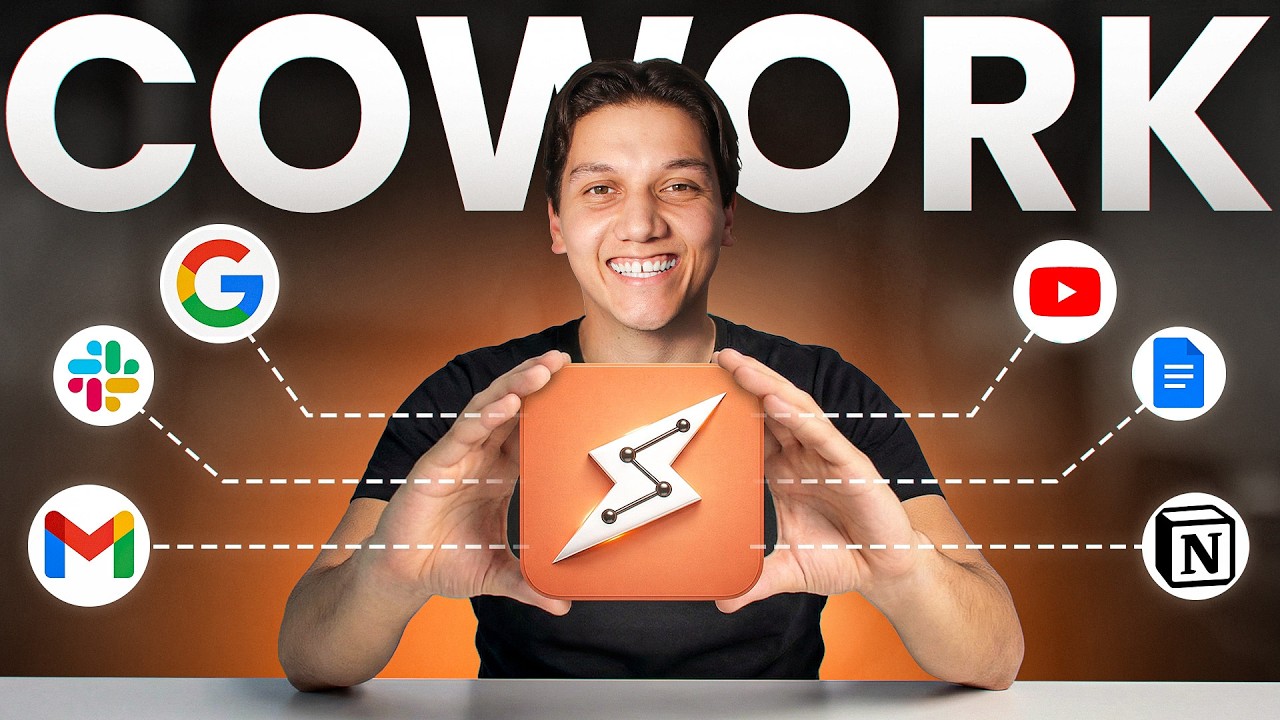
mmd into the context files and then second save your YouTube script skill.md from earlier into your skills directory, and then third connect Gmail, Google calendar slack and notion and then fourth inside the project set up two scheduled tasks: Morning briefing daily at 6:00 a.m. Check my Gmail, Google calendar, and notion.
Summarize what’s on my plate and save it as a morning brief.MD daily briefings. And then content research mornings at 9:00 a.m. Search for AI automation topics from the past 7 days. Identify three video opportunities. Save a research brief to this project folder. And then post a summary for me over to Slack. Now, once all of these steps are done, all you have to do is just hit schedule.
And then lastly, connect to dispatch. Then I pick the best concept. I pull out my phone and then dispatch a draft of a full script outline for concept 2 using my YouTube scale. Save to the YouTube content project. And then I come back to a script outline that matches my voice. It follows my stature and references the research film that morning. Not a chatbot.
This is what you call a cool working system. Learn more about Claude Cowork. Read this article.
Three Things to Walk Away With
Okay. Three things to walk away with. One, set up your folder structure and MD files. Two, use projects for anything you do more than once. And then three scheduled tasks are the real unlock. Every prompt, every template, and the exact folder structure from this video are all inside our free school community.
The link is down in the description below. Drop a comment to let us know what you think about the video, and also tell me which section hit the hardest. I can promise you that I’m going to take my time to read through each and every single one of your comments. And also give this video a like. Check out the video that’s popping up on the screen right now.